


Formulation development · OEM · ODM · CRO · CDMO
Hydroxyapatite pouches
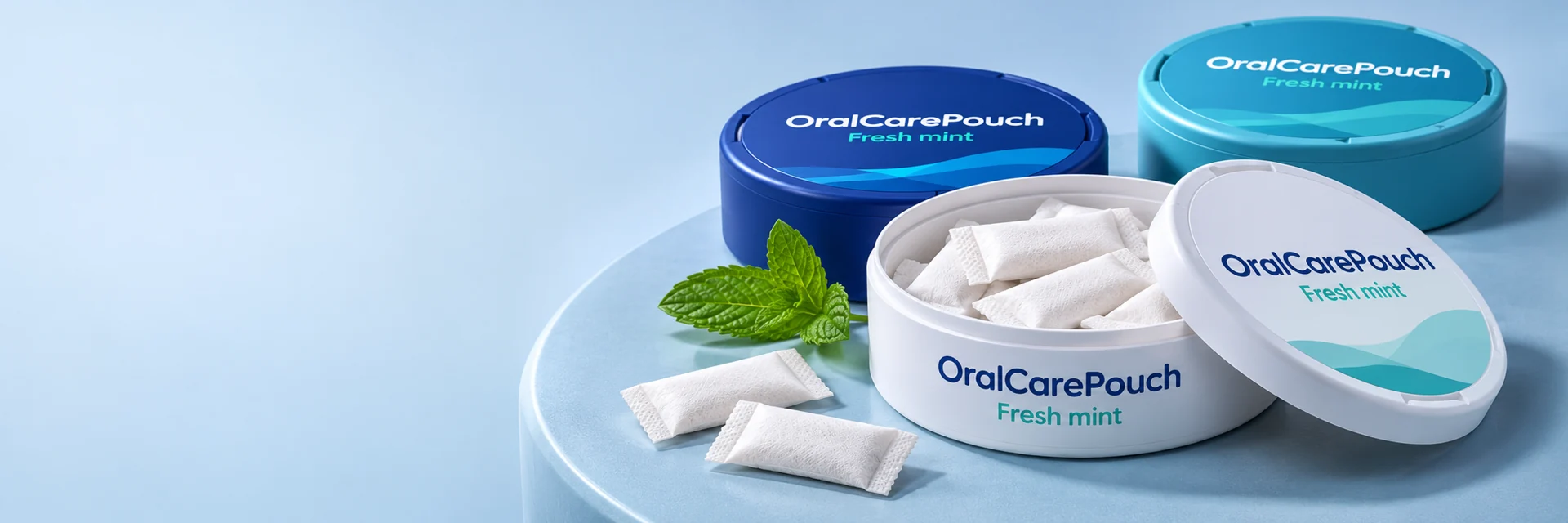
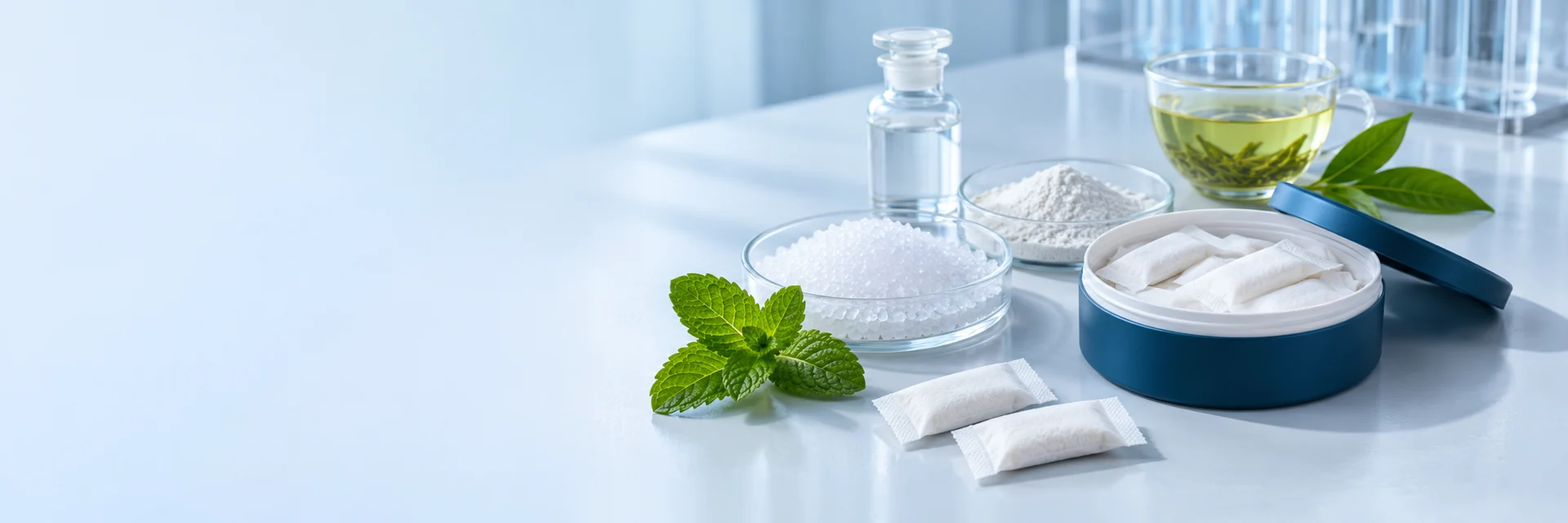
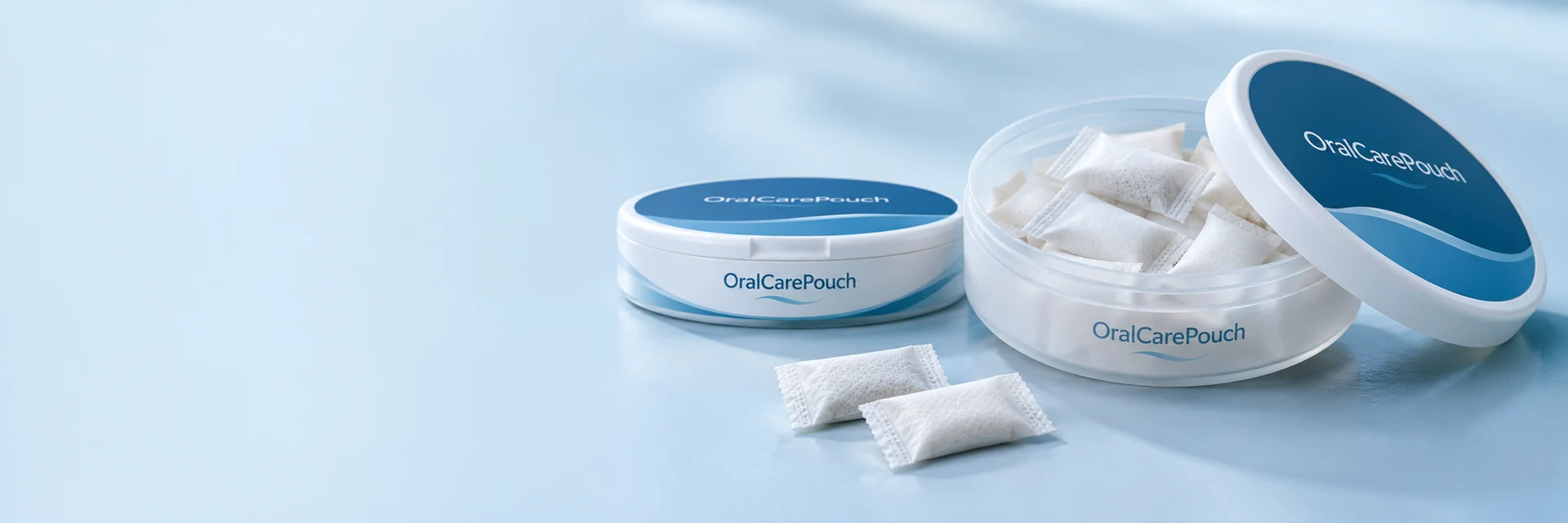
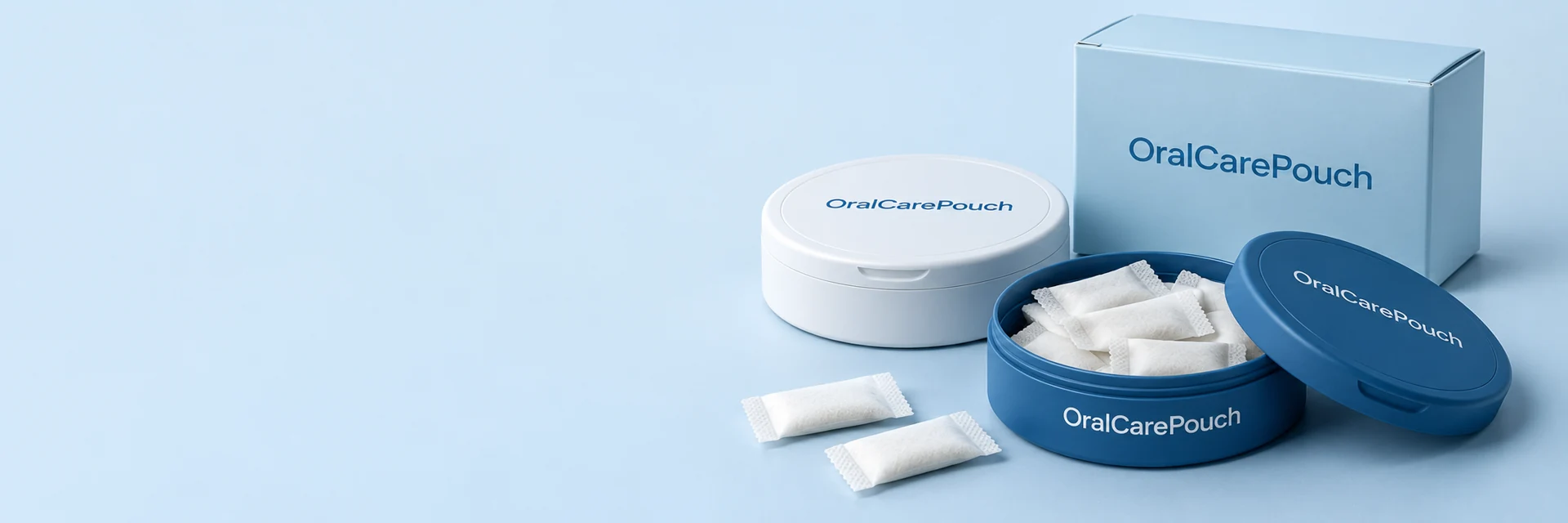
Explore mineral oral care pouch concepts through material identification, dispersion, pouch release and exposure review.
Request a quoteProduct and development visualizations
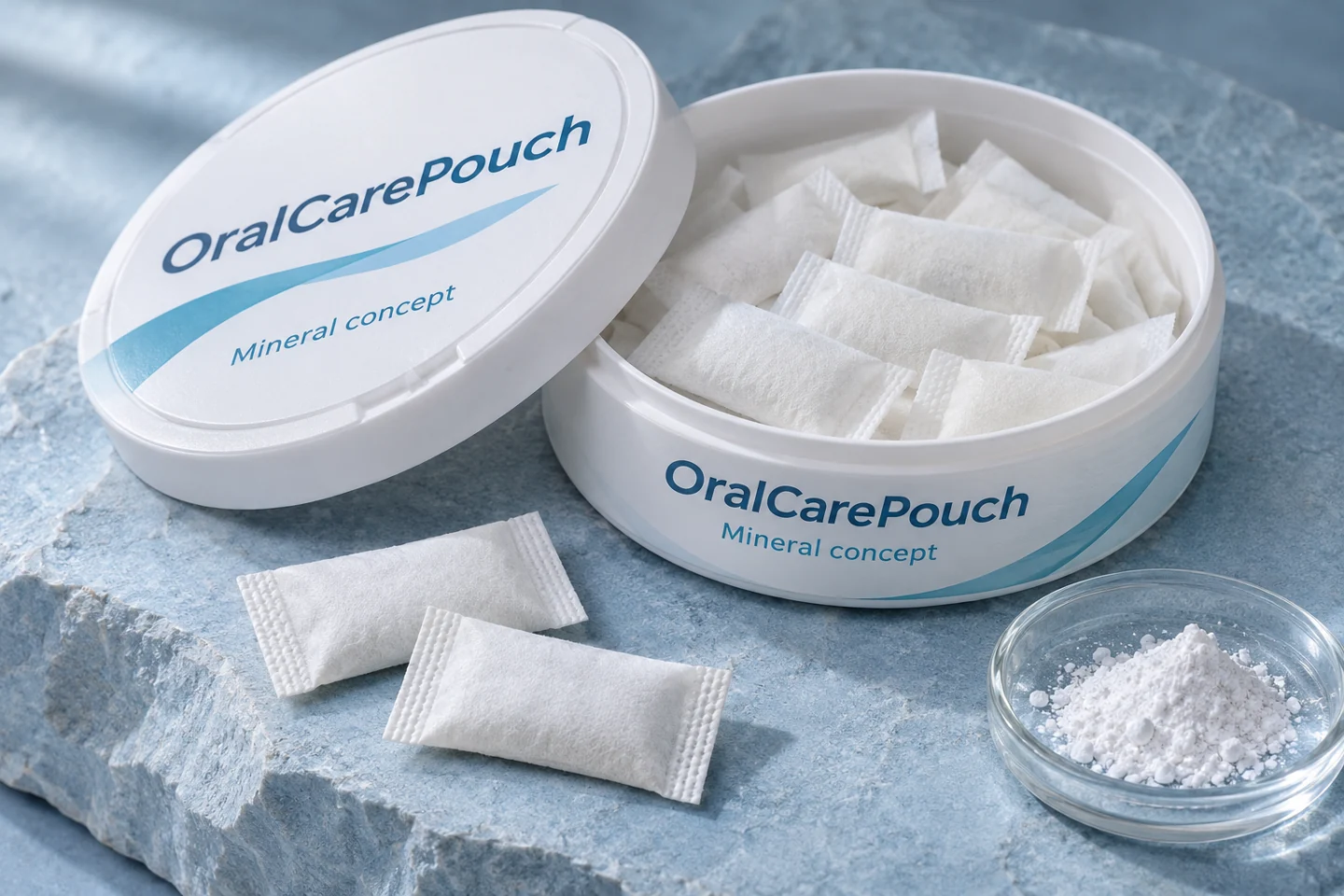
The development direction
Hydroxyapatite is a family of materials whose particle characteristics matter. A toothpaste or mouthwash assessment cannot be treated as authorization for a pouch. Nano hydroxyapatite requires identification of the exact material, morphology, coating and intended exposure; enamel-support wording needs finished-product evidence.
Candidate concepts
The following IDs are development briefs for technical discussion. They are not stocked SKUs, validated formulas or approved consumer products.
| Concept | Direction | Review focus |
|---|---|---|
| C15 | Hydroxyapatite and mild mint | Material identity, morphology and dispersion |
| C16 | Hydroxyapatite and xylitol | Sweetener balance and release through the pouch |
| C17 | Non-mint hydroxyapatite | Uniformity and intended contact conditions |
| C18 | Mineral particle-size comparison | Nano and non-nano materials are not interchangeable |
| C19 | Calcium-phosphate alternative | Availability, classification and dispersion |
| C20 | Mineral and botanical flavor | Compatibility and evidence scope |
What can be customized
- Material identity and particle characteristics
- Dispersion and content uniformity
- Sweetener and flavor compatibility
- Pouch retention and release behavior
OEM, ODM, CRO and CDMO scopes can be discussed for this series. The formulation, ingredient form, loading, flavor, pouch dimensions, seal method, pack count and artwork are evaluated together. No standard dose, shelf life, MOQ or production lead time is assumed.
Validation before a specification
- Raw-material characterization documents
- Contact route and exposure conditions
- Local safety and tolerance assessment
- Evidence matched to any proposed claim
Record sample ID, formulation version, pack version, test conditions, method and acceptance criteria. A supplier COA describes the stated material and batch; it does not replace finished-product evaluation. Separate an observation from a specification and from a marketing claim.
From sample to a controlled project
Start with a target country and intended adult use. Describe the flavor profile and pack you want, then compare a limited set of numbered samples. Use the same evaluation sheet for each version. Decide which differences justify another prototype before approving artwork or ordering commercial packaging. Changes after approval require review of the formula, label, testing and quotation.
Relevant documents include ingredient specifications, a sample comparison record, the proposed finished-product specification, packaging drawings, applicable test methods, a stability plan and a claim review. Availability and authorship of each document are agreed in the project scope.
Use the sample evaluation guide or prepare a project specification.
Sources and scope
These references inform the questions used in development review. They do not certify our company or demonstrate the safety, efficacy or market authorization of a finished oral care pouch. Updated when the underlying guidance or project evidence changes.
Project questions
Is this a ready-to-sell formula?
No. These are candidate development directions. A saleable specification, label, supporting evidence and market conditions must be confirmed for the project.
Can this direction be made for my brand?
OEM, ODM, CRO and CDMO project scopes can be discussed. Send your target market, ingredient or sensory brief and preferred packaging for feasibility review.
What determines the quote?
Formula complexity, ingredient requirements, number of prototypes, testing, packaging, SKU count and order quantity determine the scope. MOQ and timing are confirmed in the quotation.
Bring your project into focus.
Tell us your target market, formulation direction and pack requirements. Scope, specifications and commercial terms are reviewed for your project.
Request a quote