
Heat seal or ultrasonic seam? Design a useful pouch trial
A seam comparison should hold the pouch material and geometry under control, then assess the actual defects and use conditions.
Start with the pouch requirement
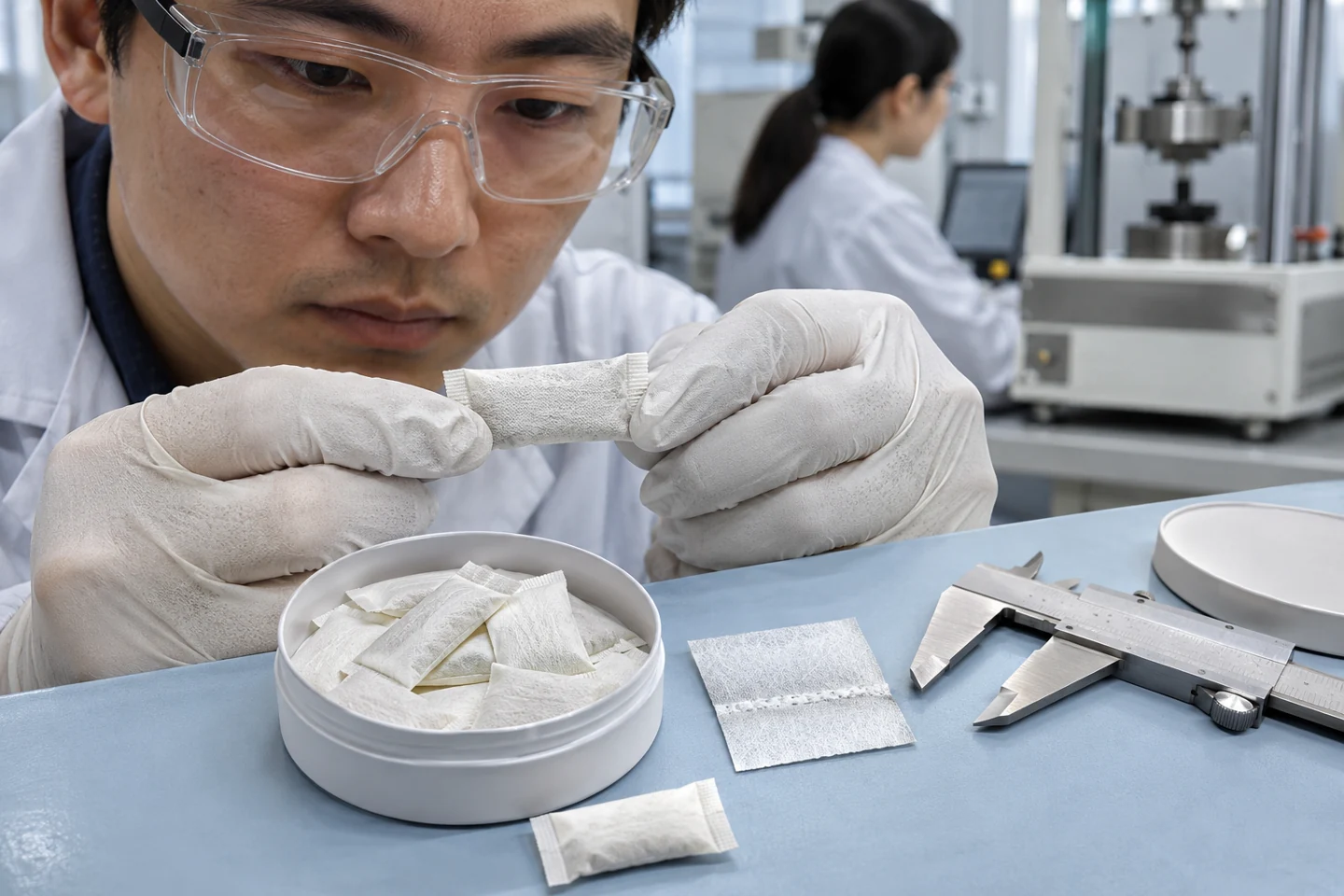
A pressed heat-seal edge and an ultrasonic seam can look different, but appearance is only one part of the selection. Define the intended pouch dimensions, fill geometry, fabric and consumer-use conditions. The trial should reflect the proposed product rather than an empty fabric sample alone.
Common commercial pouch formats provide a useful visual scale reference. They are not production specifications for a new formula. The filled pouch, material contact properties and process feasibility still need confirmation. A copied can diameter or pouch length does not define the seam requirement.
Control the variables that can obscure the result
Record material supplier and lot, basis-weight specification, pouch geometry, fill, equipment and process settings. If two samples differ in fabric and seam method at the same time, the result cannot readily be assigned to the sealing method. A narrower edge may also change the feel without improving containment.
Define defects before inspection. Open sections, channels, trapped material, tearing and visible leakage should have consistent descriptions. Photographs linked to sample IDs can help the team discuss the same defect. A general acceptable or unacceptable impression is less useful than a defined observation.
Include relevant wet and dry conditions
A dry handling check and a wet-use assessment answer different questions. The methods should describe preparation, contact conditions, loading or handling where applicable, and the acceptance basis. The technical team must decide which tests represent the intended use and which are process-development experiments.
Pair physical observations with structured sensory feedback where appropriate. Seam stiffness, edge feel and pouch softness can matter to the brief. Sensory preference does not replace containment or contact-suitability assessment. Any unexpected reaction must follow the agreed product-safety process.
Approve a process window and a reference
The useful output is an approved material and geometry with a supported operating range, inspection method and acceptance criteria. Keep a physical or documented reference sample and link it to the formula, pouch drawing and pack version. State how a process or material change will be reviewed.
Neither seal method should be marketed as universally superior without the relevant evidence. The choice depends on the fabric, filled product, equipment and defined requirements. A disciplined trial gives the brand and manufacturing team a basis for that decision and makes later defect investigation easier.
Keep this in the project record
Records to retain
| Trial item | Record |
|---|---|
| Material | Identity, supplier, lot and specification |
| Geometry | Pouch dimensions, fill and seam profile |
| Process | Equipment and controlled settings |
| Test conditions | Dry, wet and handling preparation |
| Acceptance | Defect definitions, criteria and approved reference |
Continue the project review
Use the specification worksheet to retain the relevant version, owner and decision. For physical or sensory observations, the sample evaluation guide helps keep comparison conditions consistent. Send a concise project brief when you are ready to define the work.
Project questions
Does this guide establish a finished-product result?
No. It sets out a development and procurement method. Product-specific data, methods and responsible review are needed before a specification or claim is approved.
Which version should the records refer to?
Identify the formula, pouch, packaging and method versions together. Record the sample or batch code and date so observations and decisions can be traced to the material actually evaluated.
Bring your project into focus.
Tell us your target market, formulation direction and pack requirements. Scope, specifications and commercial terms are reviewed for your project.
Request a quote